What is HIE in newborns?
HIE, or hypoxic-ischemic encephalopathy, is a type of newborn brain injury caused by reduced oxygen and blood flow to the brain before, during, or shortly after birth.
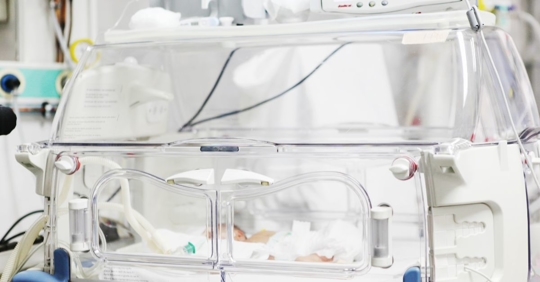
If your baby was diagnosed with HIE, you need clear answers, not medical jargon. Hypoxic-ischemic encephalopathy is frightening precisely because it is hard to understand, and you are trying to make sense of it while caring for a newborn who needs you. Understanding what HIE is, what causes it, and when it points to a preventable error is where many Maryland families begin.
SCHEDULE A CONSULTATIONKey Takeaways for HIE in Newborns
- HIE (hypoxic-ischemic encephalopathy) is a newborn brain injury caused by a lack of oxygen and blood flow to the brain around the time of birth.
- Current reviews generally place moderate-to-severe HIE at roughly 1 to 3 per 1,000 live births in high-income countries, and a U.S. study of 2012 to 2019 births found a stable rate of about 1.7 per 1,000.
- Some cases result from unavoidable complications, while others follow preventable failures in prenatal, labor, or delivery care.
- Therapeutic hypothermia, or cooling therapy, is supported for eligible newborns with moderate-to-severe HIE, generally those born at or after 36 weeks, and is ideally started within 6 hours and continued for 72 hours, which makes timely recognition critical.
- When HIE results from a provider’s departure from the standard of care, Maryland families may have a birth injury claim.
What Is Hypoxic-Ischemic Encephalopathy?
Hypoxic-ischemic encephalopathy is a brain injury that happens when a baby’s brain is deprived of adequate oxygen and blood flow around the time of birth. The name breaks down plainly: hypoxic means too little oxygen, ischemic means restricted blood flow, and encephalopathy means brain dysfunction.
How the Injury Happens
When the brain loses part of its oxygen and blood supply, damage does not stop the instant oxygen returns. Research published through the National Institutes of Health describes an initial energy failure followed by a second wave of injury over the hours that follow, a process that may damage or kill brain cells. This secondary phase is one reason prompt recognition matters. It is also worth knowing that not every newborn with signs of brain dysfunction has HIE, because other conditions may look similar, so the diagnosis calls for a full medical evaluation rather than an assumption based on a difficult birth.
A Spectrum From Mild to Severe
HIE is not a single fixed condition. It ranges from mild, where a baby recovers with little or no lasting effect, to severe, where the injury threatens survival or causes permanent disability. Where a child falls on that spectrum depends largely on how long the brain went without oxygen and how quickly the injury was addressed.
What Causes HIE in Newborns?
HIE is caused by anything that interrupts the flow of oxygen-rich blood to a baby’s brain during pregnancy, labor, delivery, or the hours after birth. Some of these causes are preventable with proper medical care, and some are not. The difference is the heart of any legal question that follows.
The table below separates factors that may involve preventable medical errors from those often outside a provider’s control. Preventability is always case-specific, and it turns on whether the care met the accepted standard.
| Potentially Preventable Factors (When Mismanaged) | Factors Often Outside a Provider’s Control |
|---|---|
| Fetal distress that monitoring missed or failed to act on | Certain genetic or metabolic conditions |
| A delayed emergency cesarean delivery | Some infections that develop before birth |
| Untreated umbilical cord compression or cord prolapse | Unforeseeable placental events |
| A slow response to signs of severe oxygen deprivation after birth | Cases with no identifiable cause |
The Role of Fetal Monitoring
Many preventable HIE cases trace back to fetal monitoring. Monitoring during labor is meant to reveal when a baby is in distress and not getting enough oxygen. When those warning signs are missed, misread, or not acted on quickly, a treatable situation may become a permanent injury. This is among the most common failures behind preventable birth injuries.
How PPHN Relates to HIE
Persistent pulmonary hypertension of the newborn, or PPHN, is a circulatory condition in which a baby’s circulation fails to make its normal transition after birth, causing severely low blood oxygen. The National Institutes of Health describes it as a life-threatening condition that requires prompt recognition.
PPHN is not simply a preventable cause of HIE. It is a serious condition in its own right that often occurs alongside HIE, and while delayed recognition or treatment may prolong low oxygen, PPHN on its own does not establish negligence or prove what caused a brain injury.
SCHEDULE A CONSULTATIONSigns of HIE and Its Later Effects
The signs of HIE appear across different timeframes, from the first hours of life through the years that follow. Recognizing them helps families understand what they are seeing, though only a medical team is able to evaluate a specific child.
Early Signs in the First 1 to 3 Days
In the hours and first days after birth, signs of HIE may include seizures, difficulty breathing, feeding problems, low muscle tone, an unusually weak or absent cry, and altered levels of alertness.
Research published through the National Institutes of Health notes that seizures in newborns with moderate HIE often appear within the first 24 hours and may increase over the next day. These early signs are usually what prompt a medical team to suspect HIE.
Later Developmental Effects
HIE itself is a newborn condition, but its effects may become clearer as a child grows. Over weeks and months, parents may notice missed developmental milestones, delays in sitting or crawling, unusual stiffness or floppiness, or problems with vision or hearing.
These are later developmental effects of the original injury rather than new signs of HIE, and they sometimes appear in children whose newborn symptoms seemed mild, which is why ongoing follow-up matters.
Long-Term Outcomes
The long-term picture ranges widely. Some children with mild HIE grow up with few or no lasting effects, while others develop permanent conditions such as cerebral palsy, epilepsy, or cognitive and developmental disabilities. The severity of the initial injury and the speed of treatment both shape where a child lands.
How Is HIE Treated, and Why Does Timing Matter?
The main treatment for moderate-to-severe HIE is therapeutic hypothermia, often called cooling therapy, which lowers the baby’s body temperature to slow the second wave of brain injury. It is not appropriate for every baby, and eligibility follows specific criteria.
Who Cooling Is For
Under the 2026 clinical report from the American Academy of Pediatrics, the guidance for cooling includes the following:
- Recommended for eligible newborns with moderate-to-severe HIE born at or after 36 weeks
- Ideally begun within 6 hours of birth and continued for 72 hours
- May be considered for some infants born at 35 weeks, or presenting between 6 and 24 hours old, after a risk-and-benefit discussion with the family
- Not supported by the evidence for mild HIE
Why Timing Is So Important
That narrow window is why timing matters. Recognizing oxygen deprivation quickly, and acting on it, may change a child’s outcome. It is also why delays in diagnosis or treatment often become central to the legal question of whether care met the standard the law requires. This is medical background, not medical advice.
When HIE Is Caused by Medical Negligence
Not every case of HIE involves a medical error. Some result from complications no one was able to prevent. But when HIE follows a preventable cause that was mismanaged, such as unaddressed fetal distress or a cesarean delivery that came too late, it may amount to medical malpractice.
A malpractice claim in Maryland requires all four of these elements:
- A duty of care owed by the provider to the patient
- A departure from the standard of care by the provider
- Causation, a direct link between that departure and the injury
- Damages, the real harm that resulted
The contested element is usually the second: whether a reasonably competent provider, facing the same situation, is expected to have acted differently. Answering it requires a careful review of the fetal monitoring records, the delivery notes, and the timeline of decisions. A qualified reviewer in the relevant specialty reads these together and connects a specific failure to the specific harm, which is the link a claim depends on.
SCHEDULE A CONSULTATIONLegal Options for Maryland Families
Families whose child developed HIE from preventable care may have a birth injury claim under Maryland law. Because HIE often means a lifetime of care, these claims focus heavily on the future, and a few points shape how they are built.
Economic Damages Are Not Capped
Maryland caps non-economic damages in malpractice cases, but places no cap on economic damages, the category covering a lifetime of medical care, therapy, equipment, and lost earning capacity. For a child with a severe injury, that uncapped category is often where a claim’s real value lies. Building it requires life-care planners and economic reviewers who project what the years ahead require.
A Certificate of Qualified Expert Is Required
Maryland generally requires a Certificate of Qualified Expert from a qualified reviewer before a claim proceeds. The reviewer must attest that a provider departed from the standard of care and caused the injury, which is why early records review matters.
The Filing Deadline Is Strict
While § 5-109 sets the general medical malpractice deadline, special tolling rules may apply to an injured child, and parents may hold a separate claim with its own earlier deadline. Because these timelines are technical and interact, families are wise to have the specific dates reviewed early rather than assume there is time to spare.
HIE in Newborns: Questions Answered by Our Maryland Birth Injury Attorneys
Families researching HIE often have a few more questions once the basics are clear.
Is HIE always caused by medical malpractice?
No. Some cases of HIE follow complications that were not preventable, and those are not malpractice. A case points toward malpractice only when a provider departed from the standard of care, such as ignoring signs of fetal distress or delaying a necessary delivery, and that failure caused the injury. The only way to know which applies is to have the medical records reviewed against the standard of care.
How is HIE diagnosed in a newborn?
Medical teams generally suspect HIE based on a newborn’s condition shortly after birth, then use tools like neurological examinations, imaging, and monitoring to evaluate it. This is a medical process handled by the child’s providers. From a legal standpoint, those same records later become the evidence that shows what happened, when it happened, and whether the response met the standard of care.
How long do Maryland families have to file an HIE claim?
The timeline depends on the specific facts. Maryland sets a general medical malpractice deadline, but special tolling rules may extend the deadline for an injured child, and a parent’s own related claim may run on a shorter schedule. Because these rules interact and a missed deadline may end a claim, it is wise to ask an attorney early rather than wait.
Can a child recover from HIE?
Outcomes vary widely. Some children recover well, particularly in milder cases, while others live with lasting conditions such as cerebral palsy or developmental disabilities. Recovery depends on the severity of the original injury, how quickly it was treated, and the care and therapy that follow. Only a child’s own medical team is able to speak to their individual outlook.
You Do Not Have to Sort This Out Alone
Learning that your baby has HIE turns an ordinary week into something no parent is ready for. Whatever caused it, you are allowed to ask questions, and you are allowed to want answers about whether it was preventable.
If you are wondering whether your child’s HIE was avoidable, we are here to help you understand what the records show. Our Maryland birth injury attorneys offer free, confidential consultations. Call Brown & Barron at (410) 547-0202 whenever you are ready to talk it through.
SCHEDULE A CONSULTATION